
1. How do I sign-up for the study and what is the process for getting started?
You can sign-up to take part in our study by completing the sign-up form: https://elm-group.org/participate/
Please be aware that signing up for the study is simply an expression of interest, not a commitment to continuing in the study.
After submitting this form, you will receive an automatic email. If you are eligible for the study, the email will tell you about the next steps.
You will receive an automated email from: noreply@qemailserver.com
It will provide a link for the first part of the study. Before you answer any questions or give any further information, you will read through the Participant Information Sheet and Consent Form. If you decide to take part in the study after reading these, the first task will begin. If you decide not to consent, the study will not begin.
2. I accidentally missed a part of the study. What happens now? Can I continue?
That’s ok, these things happen! The only parts that you can’t skip are the health and wellbeing surveys at the start of each 6-month block. This is because of logistical reasons as much as anything else – if you skip these the system doesn’t know that you exist, so you won’t get access to the rest of the tasks.
After the health and wellbeing survey is done at the start of a 6-month block, it is fine if you miss one or two tasks. If you stay at 80% or more completion, you will still be able to receive your thank you gift for the current 6-month block of the study. This applies no matter which method you are using the complete the study, app or website.
If you miss a task and it is no longer within the 24-hour window from when the notification arrived, just skip that task. Just wait until you get your next email reminder, and then you will be able to continue in the study.
3. I pressed the wrong thing/missed a question but I couldn’t see an option to go back?
No worries, it is easy to press the wrong option with all the surveys and tasks to get through.
We can’t have a back button for this study unfortunately, because of the way the coding works for the memory recording aspects of the study. In the Qualtrics system you can either have events recorded at one time shown to the same person at a later time, or a back button. For some technologically quirky reason, you cannot have both. As we want the memories to carry over for participants; we had to sacrifice the back button.
If you’ve skipped over a question, we can actually edit the data in the system and add in a response for you. So, if you want to add in some information or change a response, then we can do this for you, so do get in touch with us.
Otherwise, not to worry if you have missed a task or a question, just pick up the study when the next task arrives.
4. I need/want to withdraw from the study, what do I do?
We are sorry to see you go. Every contribution you have made to the study is valuable and important, and we really appreciate the time and effort that you have put in.
To officially withdraw, you can fill out the following form. If possible, it would be great for us if you can take a minute to let us know that you want to withdraw and the reason why. It is important for us to be able to accurately report this in scientific publications. It will also ensure that we make future studies better for all our participants.
You can stop participating in the study at any time, and you do not have to fill out this form if you don’t want to. Anyone can stop taking part in the study at any time, for any reason.
To stop reminders on the email and website version of the study:
In this version, all reminders are programmed and scheduled from completion of day two of the study and we cannot turn this off. However, you could block the study reminder email address. That way you won’t see them in your regular email inbox as they would get automatically shifted to spam and then deleted after 30 days.
The reminder email address is: noreply@qemailserver.com
This is the address to block if you want to avoid see the reminder emails.
- See this guide on how to block email addresses in Gmail
- See this guide on how to block email addresses in Outlook/Hotmail
- See this guide on how to block email addresses in iCloud
- Here is how to block senders in Xtra email:
- Sign in to Xtra Webmail.
- Click the Settings (gear icon) in the top right.
- Select Email from the left-hand menu.
- Choose Blacklists.
- Add the specific email addresses or domains you wish to block.
5. Can I travel and take part in this study?
You can participate in the study while traveling, in fact, that is great for us since travel is a part of people’s everyday lives, and we want to capture memories of everyday life and how people feel about those events. This is one of the reasons we have tried to keep the time burden of the weekly tasks low – so that they can fit around such activities like this and a wide range of people doing all sorts of activities can be involved.
If you were willing to complete tasks while you were overseas, then that is great. To make participation as hassle-free possible for you, you would want to have pretty easy and consistent access to the internet and to either your phone or computer so you can access your email or the app for the tasks.
Alternatively, if you had already completed Week 1 before you left, you could probably skip the tasks while you were overseas, and if you completed all the ones that came up when you were back in NZ, then you would still be eligible for the thank you gift.
6. What if I don’t think anything negative happened in the last week, can I just leave that box blank? How should I approach the memory task if nothing negative tends to happen to me?
We do really want people to record both a positive and a negative event each time, as it is much better for us if there is something written down and it is more interesting for participants if something has been recorded.
That being said, we have absolutely no expectation that people are experiencing major negative or major positive events every other week. Whatever you are experiencing is totally valid, and that’s what we want you to record. If your negative events are pretty mild and transient, that’s completely fine. To put it another way, nothing is too mundane/mild/normal for the study!
We are interested in everyday people, and their everyday feelings and experiences.
Even if you would rate an event as generally unimportant, not memorable, or mildly negative at most, that is absolutely fine. Some examples of negative events that would be more than good enough include “the coffee I made this morning wasn’t as good as usual” or “the weather was rubbish today so I couldn’t get into the garden as I had planned”.
7. I don’t have intense emotions, what should I record when it asks about my current mood?
The most important thing for us is that people report how they are feeling as accurately/honestly as they can. If you feel that your moods remain pretty similar over time, that is absolutely fine. We want all sorts of people who have all different types of emotional experiences in our study, so the results from the study will be applicable to a wide range of people.
8. How come you are asking about my mood without asking why I am feeling that way? That is a bit frustrating for me and surely just random mood information without context is not useful for you?
It definitely can seem pretty strange to be asked to record your mood without being able to note down the reasons for your feelings or to mention any events that have affected you. This is particularly relevant if you feel the emotions you are reporting are out of character for you.
There are a few different reasons that we focus on mood in the last 24 hours and don’t ask people to write about what has influenced or caused those feelings.
The first is trying to keep the time burden for participants as short as possible, while still gathering information that is useful for our research. This study is longitudinal, which means it takes place over a long period of time, and it has a lot of tasks for people to do. We didn’t want to add to this burden if it wasn’t absolutely necessary.
The second reason is that we are largely quantitative researchers (use numbers) rather than qualitative researchers (use words). This means that our style of research and our area of expertise is around numerical data. While we have the memories recorded in writing, everything else we capture using numbers on scales.
Finally, for the mood ratings particularly, we are interested in patterns over time, rather than focusing in on particular days or reasons why someone might have a high or low mood on any given day. This helps us to get a “zoomed out” picture of each person’s mood over a long period of time. This is really valuable and important data, as it is quite rare to gather mood data frequently and over a long period of time. We can also see if patterns in mood reporting are connected to other patterns of responding over time.
Of course, if you do want to explain the context for your mood, especially if it is unusual for you, you are more than welcome to do so. You can use the contact form to get in touch with us to talk about this more at any time.
9. I am doing the study, but I’m not sure which email link to follow or what notification to press. I have a few emails together in my inbox.
No worries, we recommend just opening the latest one and continuing from there.
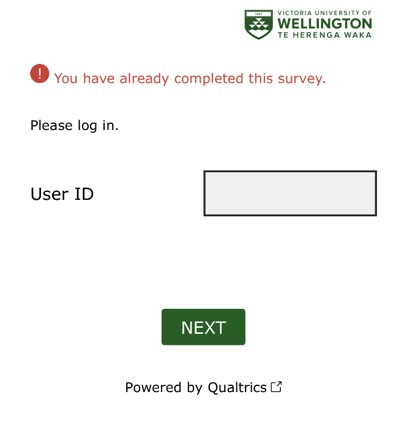
If you do click on a link or notification that leads to a study you have already done, that’s ok. Nothing will happen, the system will let you know that you’ve already completed the task and you can’t do it again.
You will see a screen that looks like this:
10. I was in the middle of a survey/task but I had to close it and go do something else. Can I keep going with the task now? Can I still complete it?
Yes! If you close any part of the study before pressing submit, you can go back and complete it before the 24-hour period for that task has ended. You may have to restart that task from the beginning though, as responses only get stored when you press submit, and are never stored before that point.
11. Who is the research intended to help? How will the results get used? When will the results be ready and how would we view them?
Who is the research intended to benefit:
The research is intended to benefit adults aged 65 and older because the results will identify specific parts of memory and wellbeing that are positively related and help us to understand how that might change with age. If we know there are specific actions to take that can improve memory or actions related to memory than can be taken to improve health and wellbeing, we can teach people about how best to integrate these actions into their everyday life. The knowledge may also be used to inform interventions to improve wellbeing as age increases in the primary care setting.
How will the results be used:
The results will be used in a number of ways, outlined more specifically in the information and consent process at the beginning of the study. A brief overview is that they will be used for academic purposes such as research publications in academic journals. As mentioned above, we hope that they might also be used to inform policy around wellbeing and ageing, and in practical ways in general self-care or at a primary care level. The practical applications of research take time and come after publications have verified the strength and reliability of any findings. Also, the potential for practical applications of course depends on us finding significant relationships between variables in the data.
Who will have access to the research results and when:
Upon completion of the study, all participants will be debriefed about the specific aims and goals of the study in more detail. A plain language summary of the results will be available on the study website, as will any publications based on this study. This information will also be available on Matt Crawford’s VUW staff page.
Publications do take time, so I can’t give any firm dates about when the publications from the results would occur. In addition, this process will take longer than usual because our study takes place over time, and we have to wait for all the data collection to occur before we can run any of our overall analyses and find out what the results were.
12. I am completing email and website version of the study, and now the website is asking me to log in with an ID number, but I don’t have one. What do I do now?
Sorry that you are experiencing this issue, the ID is supposed to self-populate and you should not have to do anything.
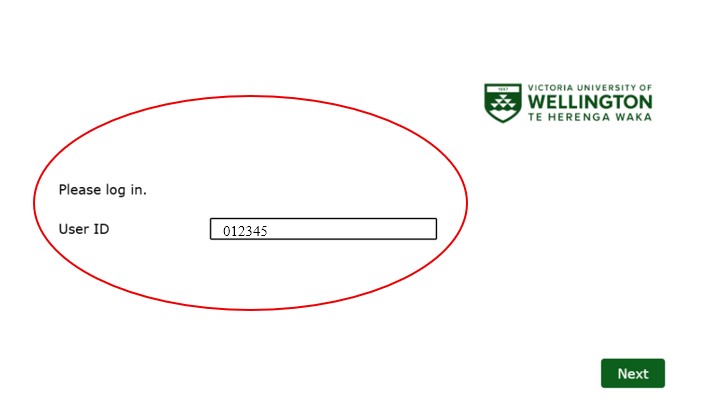
At the end of the web link (the URL) in the reminder email, there is a user code. If the study website (Qualtrics) asks for a user ID, then you can type these numbers into the box called User ID.
Example:
If the link in your reminder email looked like this:
https://vuw.qualtrics.com/study/SV3XdKuabcdu7p5Q?uid=012345
The ID number that you would type into the User ID box is shown after “uid=” on the link itself. This is the six digit number that you would enter on the Qualtrics website (In the example above it would be 012345). Then click the next button to continue with the study
13. I have quit the study but I am still getting the reminder emails, can you do something about this?
No problem, anyone is free to stop taking part in the study at any time, for any reason. If you have used the official withdrawal form, we will have your withdrawal recorded.
Due to the way the study is coded, the emails are all triggered on Day 2 of the study, and then they go into holding to be released on the correct date. As they are pre-sent, we cannot stop them getting to you, but you can avoid seeing them simply by blocking the study reminder email address.
The reminder email address is: noreply@qemailserver.com
14. I have another issue or question that has not been answered on this page. What should I do?
Please feel free to contact the research team at any time about questions or concerns that you may have.
You can fill out the form on this page

